Aiman Kulay
DL Classifier Model
A capstone project completed during my Artificial Intelligence and Data Science course at the Boston Institute of Analytics. Starting with a provided dataset, I carried out the end-to-end analytical workflow, from data cleaning and exploration to machine-learning and deep-learning experiments, and built interfaces for presenting the results.
Technologies & tools
MLDLPlotlyKerasStreamlitJupyterTableau
Overview
A capstone project completed during my Artificial Intelligence and Data Science course at the Boston Institute of Analytics. Starting with a provided dataset, I carried out the end-to-end analytical workflow, from data cleaning and exploration to machine-learning and deep-learning experiments, and built interfaces for presenting the results.
The challenge
Building a reliable classification solution requires more than training a model. The data must be understood and prepared properly, different algorithms need to be evaluated, and the results must be communicated in a way that makes them easier to interpret.
Approach
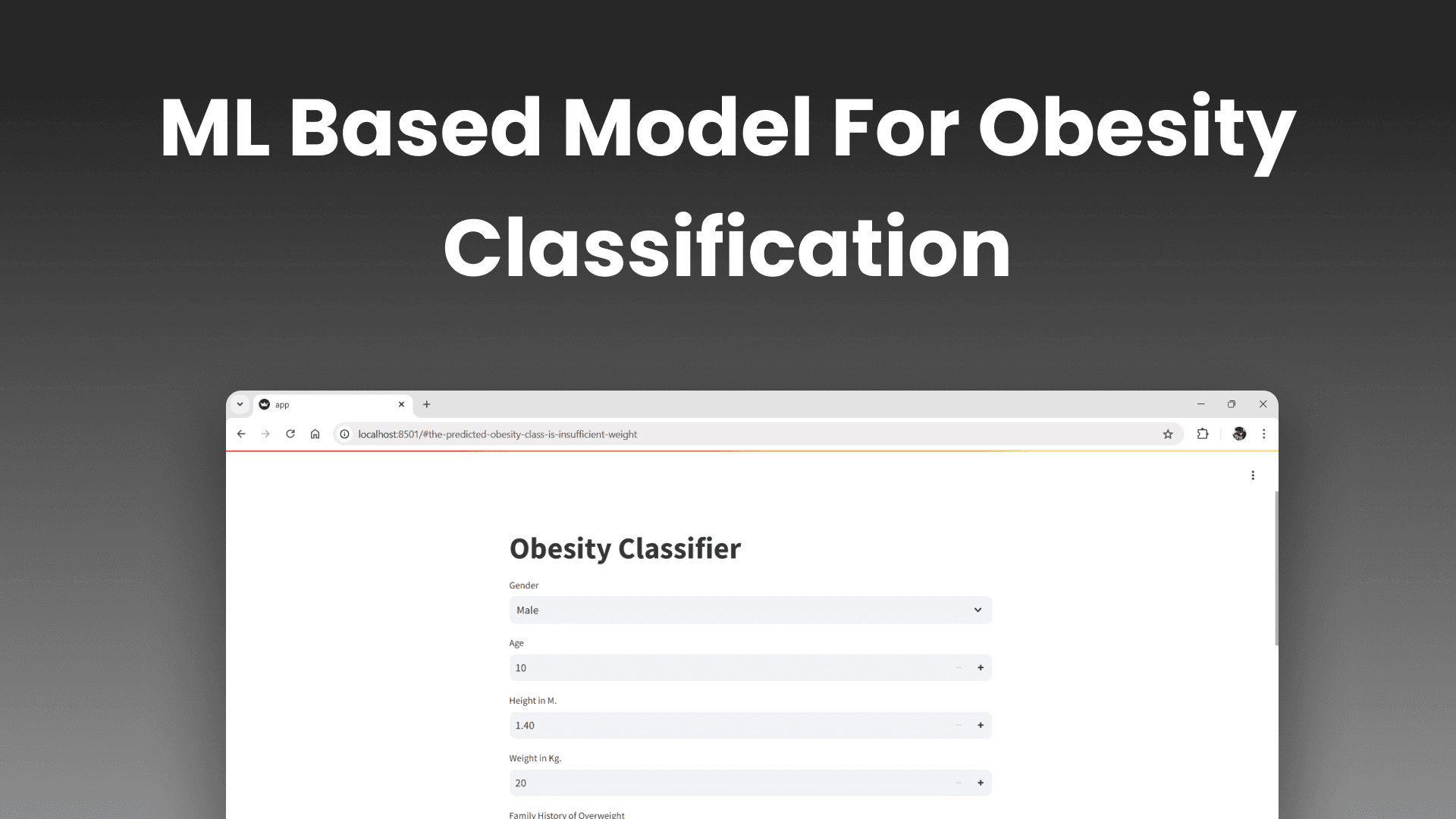
I independently worked through the data science pipeline, including data cleaning, preprocessing, exploratory analysis, and feature preparation. I trained and compared several machine-learning models before experimenting with deep-learning approaches. I then developed a Streamlit interface and a Power BI/Tableau dashboard to make the results more accessible.
Key features
- End-to-end data cleaning and preprocessing
- Exploratory data analysis
- Feature preparation and transformation
- Implementation and comparison of multiple machine-learning models
- Deep-learning model experimentation
- Model evaluation and result analysis
- Interactive Streamlit interface
- Power BI/Tableau dashboard for visual analysis
Takeaway
The capstone brought together the major stages of an applied data science workflow. It strengthened my understanding of how data preparation, algorithm selection, model evaluation, and visualization fit together when developing and communicating a machine-learning solution.